Building a new modular home in Central PA, across the Mid-Atlantic, or in neighboring states is an exciting journey. You get to design a space tailored to your lifestyle while enjoying faster build times and dependable craftsmanship. However, figure out the financing before setting the first module on your foundation. Navigating your modular home financing options can feel confusing when you try to weigh upfront fees, required cash reserves, and monthly payments.
At Modular Home Loan, we serve as your local trusted financing partner. We guide you through every phase of the construction loan process so you can make confident decisions. A common question buyers ask is whether an FHA loan or a conventional loan provides the lowest start-up costs. Here is a clear breakdown of how the guidelines work, what fees to expect, and how to choose the right path for your budget.
Key FHA Modular Home Guidelines Compared to Conventional Financing
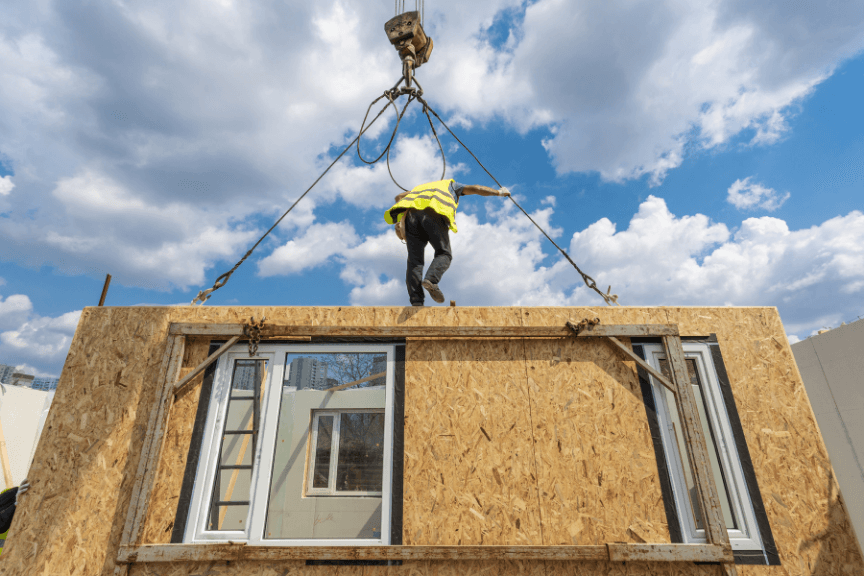
To understand how these two loan types work, you first need to understand how lenders treat modular construction. Unlike manufactured homes built on a temporary steel chassis, modular homes are constructed in sections inside a climate-controlled facility. They are transported to your site and placed permanently on a foundation. Lenders classify them as real property, just like traditional site-built homes, because they meet state and local building codes. When you start reviewing FHA modular home guidelines, you will notice that the Federal Housing Administration focuses heavily on property installation and credit flexibility. Here are the core rules for an FHA option compared to conventional standards:
- Foundation Requirements: FHA rules require the modular home to attach to a permanent foundation that meets local building codes and FHA safety standards. Conventional loans also require a permanent foundation, but their site inspection rules are often less rigid about minor site details.
- Credit Score Thresholds: An FHA loan allows you to qualify with a credit score as low as 580 for a low down payment option. Conventional loans usually require a minimum credit score of 620, with the best interest rates reserved for scores of 720 or higher.
- Debt-to-Income Flexibility: FHA programs generally allow higher debt-to-income ratios, making it easier to qualify if you have auto loans or student debt. Conventional lenders prefer lower debt ratios and require stricter income verification.
- Land Ownership: Both programs let you combine the land purchase and the home build into a single construction-to-permanent loan. However, FHA guidelines require strict appraiser checks on site suitability, water supply, and sewage systems.
When exploring FHA modular homes, understanding these basic rules ensures you avoid any surprises during the approval process.
Understanding FHA Modular Home Guidelines for Down Payments and Upfront Costs
If your main goal is minimizing the amount of cash you bring to the closing table, you must look closely at down payments, closing costs, and mortgage insurance fees.
Down Payment Requirements
Applying for a modular home FHA loan allows you to put down as little as 3.5% of the total purchase and land price. On a $300,000 project, a 3.5% down payment equals $10,500.
Conventional loans offer down payment options as low as 3% for qualified first-time buyers, while standard conventional programs require 5%. However, qualifying for a 3% conventional down payment requires stronger credit and lower debt levels. For buyers with average credit, the FHA program remains the most accessible low down payment option.
Upfront Mortgage Insurance vs Private Mortgage Insurance
The biggest difference in start-up costs comes down to mortgage insurance:
- FHA Upfront MIP: FHA requires an upfront mortgage insurance premium equal to 1.75% of your loan balance. On a $300,000 loan, this fee is $5,250. The good news is that you do not have to pay this out of pocket. You can roll it directly into your total loan balance. You will also pay an annual monthly premium that stays on the loan if you put down less than 10%.
- Conventional PMI: Conventional loans do not charge an upfront mortgage insurance fee. Instead, you pay private mortgage insurance monthly if your down payment is under 20%. The rate depends on your credit score. Once you reach 20% equity in your home, conventional insurance can be removed entirely.
Seller Concessions and Closing Assistance
Another way to lower your out-of-pocket expenses is through seller concessions, where the seller or builder pays a portion of your closing costs. FHA guidelines allow sellers to contribute up to 6% of the purchase price toward your closing fees. Conventional loans cap seller contributions at 3% when you put down less than 10%. This higher cap under FHA guidelines can significantly reduce your needed cash at closing.
If you want to calculate your exact cash needed at closing, setting up a call with our team can help you map out every detail.
How Interest Rates on Modular Homes Compare Across Financing Paths
Comparing interest rates on modular homes is an essential step because your rate determines your monthly mortgage payment and overall borrowing power.
FHA loans frequently offer lower base interest rates than conventional loans, especially for borrowers with credit scores below 700. Because the federal government guarantees FHA loans, lenders take on less risk and can offer competitive rates.
However, because interest rates on modular homes do not tell the whole story, you must factor in monthly mortgage insurance. An FHA loan carries a permanent monthly insurance payment when you put down 3.5%. A conventional loan might have a slightly higher interest rate for average credit scores, but your private mortgage insurance drops off as your home value increases.
When comparing different modular home financing options, consider the total monthly cost rather than just the interest rate. A modular home FHA loan often wins on upfront savings, while a conventional loan can offer lower long-term costs if you have high credit scores and money to invest upfront.
Step-by-Step Path to Navigating FHA Modular Home Guidelines
Building a home should be an empowering experience. Here is how we help you streamline the process from your first consultation to move-in day:
- Prequalify for Financing: We review your income, credit history, and budget to determine whether FHA or conventional financing offers you the best financial start.
- Select Your Land and Home Model: Work with local modular builders in Central PA or surrounding regions to choose a floor plan that fits your land and budget.
- Complete the Construction Loan Setup: We combine your land, site preparation costs, and home build into a smooth construction-to-permanent loan structure.
- Build and Close: Your home is constructed off-site, delivered, assembled on your permanent foundation, and inspected for final loan conversion.
If you are ready to evaluate your budget and view personalized loan estimates, filling out a form on our website takes only a few minutes.
Take the Next Step with Modular Home Loan
Choosing between FHA and conventional financing comes down to your personal priorities. If your focus is keeping your initial out-of-pocket costs as low as possible, an FHA modular build provides a flexible, affordable entry point. If you have higher credit scores and want to avoid ongoing mortgage insurance fees, conventional financing may be your best match.
At Modular Home Loan, we specialize in tailor-made financing solutions for modular buyers across Central PA and the Mid-Atlantic states. We walk alongside you to ensure your financing goes smoothly from factory floor to finished home.
Schedule a call with one of our modular financing specialists today or fill out our online request form to kickstart your journey toward homeownership.